
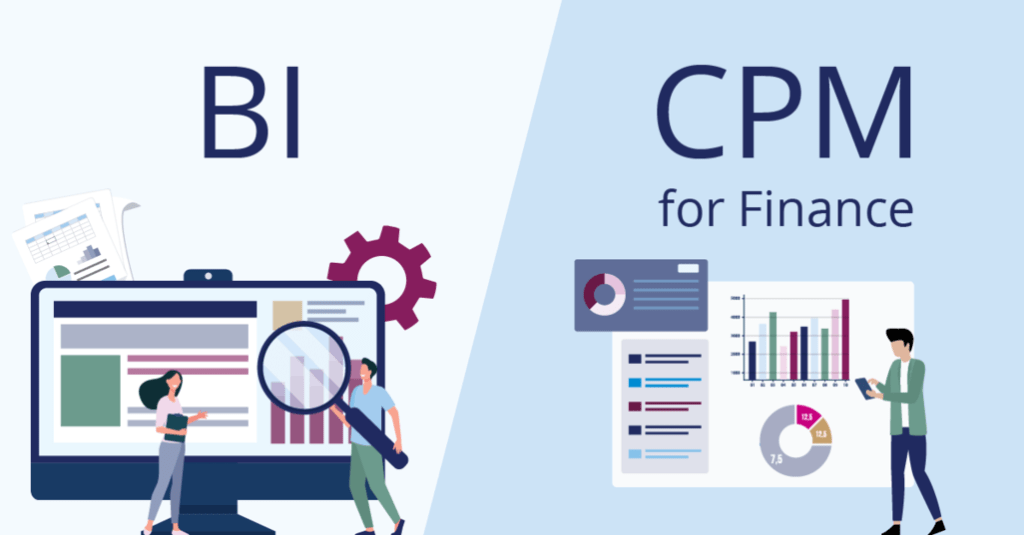
Having moved on from my role at Solver several years ago, where I competed directly with the likes of Adaptive and Prophix, I am now exploring the industry and reflecting on the changing convergence landscape discussed in my previous article. To put it simply, convergence, in my view, means tools working together to make tasks like reporting, budgeting, forecasting, and visualizations easier for customers. This includes reducing implementation costs and improving how different tools work together.
Market Observations: Following Adaptive’s acquisition by Workday in 2019, I expected a surge in ERP companies acquiring Corporate Performance Management (CPM) vendors. Instead, there was a surge in Private Equity acquisitions, likely spurred by the valuation benchmarks set by the Adaptive acquisition. Hg’s acquisition of Prophix in 2021, valued at over $520M (9-10 EV/Rev according to private sources, and 12x/13x by Bard/Chatgtp), is a notable example. Hg appears poised to integrate Prophix into its portfolio, which includes other SaaS vendors specializing in visualization and integration.
In a similar vein, Vector Capital acquired Planful, and Bravo acquired Anaplan in 2020, the latter assessed at around 18 EV/Rev. I anticipate Private Equity (PE) firms will strategically integrate Business Intelligence (BI) and CPM in their go-to-market approach without altering the vendor’s source code. As these PE firms begin to reap the benefits of synergies within their portfolio companies, I think more PE acquisitions are on the horizon. Although private equity categories vary, I expect other firms to mimic Thomas Bravo’s acquisition playbook of Anaplan due to their leadership in the industry.
In the realm of convergence, I think that private equity firms will invest more in the CPM and BI companies they acquire. They’ll not only succeed in combining these tools but also excel in integrating how they sell, offer services, provide support, and handle other functions. The evolving landscape suggests a transformative period where Private Equity’s influence on BI and CPM integration will likely shape the trajectory of these technologies in the market.
Smaller Businesses Using BI for Financial Statements: In companies with fewer than 1,000 employees, a prevailing trend is the use of BI instead of CPM to produce financial statements. I did not expect to see companies using a tool like PowerBI to produce financial statement when I worked at Solver. For CPM vendors to thrive in the SMB market, providing significant benefits beyond just time savings via automating Excel will be crucial. AI becomes a pivotal tool enabling advanced functionalities like populating macro influencers into models, aiding in headcount planning, and facilitating capital allocations.
Finance Adoption: Finance departments are increasingly recognized as strategic partners, leading to higher BI and CPM adoption. As finance teams engage with non-spreadsheet-oriented departments, CPM vendors offering only Excel-based tools face a challenge in marketing to these departments. The winning strategy lies in tools that encompass both Excel and non-Excel features. Accountants and the office of finance will continue using Excel, while other teams benefit from a modern user interface with streamlined functionality. Additionally, BI is anticipated to successfully penetrate Financial Planning & Analysis (FP&A) functions as collaborative analysis and visualization become integral. I see finance taking a pivotal role in integrating BI and CPM tools to improve departmental involvement.
Centralization: The practice of companies selling directly to business units without a centralized data strategy or IT support is fading. Initially, there was an expectation that users could access and analyze data independently, but this approach has led to security breaches, data silos, and integration problems. As a result, companies are realizing the importance of closer collaboration with IT teams.
As companies reduce their software spending, I expect finance and IT to work closely to evaluate the return on investment for different tools. Finance is likely to take the lead in streamlining tools, favoring one BI and one CPM solution. This shift presents an opportunity for CPM to extend its reach beyond finance.
Data Management: The responsibility of data collection and integration by CPM and BI vendors has led to the emergence of two separate databases, deviating from the initial goal of a unified database. This created challenges with having conflicting versions of the truth and integration bottlenecks. Interestingly, even with BI in place, executives often resort to spreadsheets for accuracy checks due to these integration issues. Companies will now pay closer attention to whether tools seamlessly collaborate and handle integration effortlessly. Vendors, in response, must adopt robust data management strategies, fostering increased partnerships and convergence.
In the lower mid-market, collaboration and acquisitions among smaller BI and CPM vendors could pave the way for joint source code or integration strategies, ultimately simplifying data management.
Challenges in Scale: Working at NetSuite, I now realize that my earlier assessment of market convergence was an overestimation. Scaling large go-to-market teams, especially in major companies, is a complex process that requires substantial effort. Recognizing this, it becomes clear that consolidating teams and standardizing go-to-market approaches in big companies will slow down the convergence process in the near future.
Market Deceleration: In the period from 2018 to 2022, mid-market Corporate Performance Management (CPM) experienced a robust 20% compound annual growth rate (CAGR), surpassing the overall CPM market’s 9% CAGR. However, in 2023, growth slowed down due to a market correction. Budget constraints led many companies to stick with Excel, considering BI/CPM more of a ‘vitamin’ than a ‘pain pill.’ Though the overall BI and CPM market is expected to decelerate, this situation creates an opportunity for partnerships between BI and CPM tools. By collaborating, these tools can position themselves as indispensable ‘pain pills,’ particularly with CPM aiding in marketing BI as a cost-cutting and data-analysis-driven resource allocation tool.
Predictive Analytics Innovation: I anticipate considerable innovation in predictive analytics in both BI and CPM, emphasizing non-financial data integration. AI acts as a catalyst for accelerated convergence. More data translates to better predictive models, leading companies to vie for uniquely trained industry-specific datasets. The imminent AI platform shift signals the next iteration—vertical AI platforms bundled with workflow, uniquely trained on industry-specific datasets. BI and CPM tools that focus on a particular industry are poised to leverage the feedback loop in their distinct datasets.
Summary: The intersection of CPM and BI is evident, shaped by acquisitions that influence the competitive landscape. Concentrating on positioning finance as a partner for internal business units catalyzes the adoption of both BI and CPM across the entire organization.
The path ahead may find equilibrium between convergence and divergence, as companies acknowledge the importance of integrated solutions while also catering to specific industry needs through customized “vertical” solutions. The market landscape continues to be dynamic, shaped by the ongoing enthusiasm surrounding AI developments.
 3 Point Analytics